
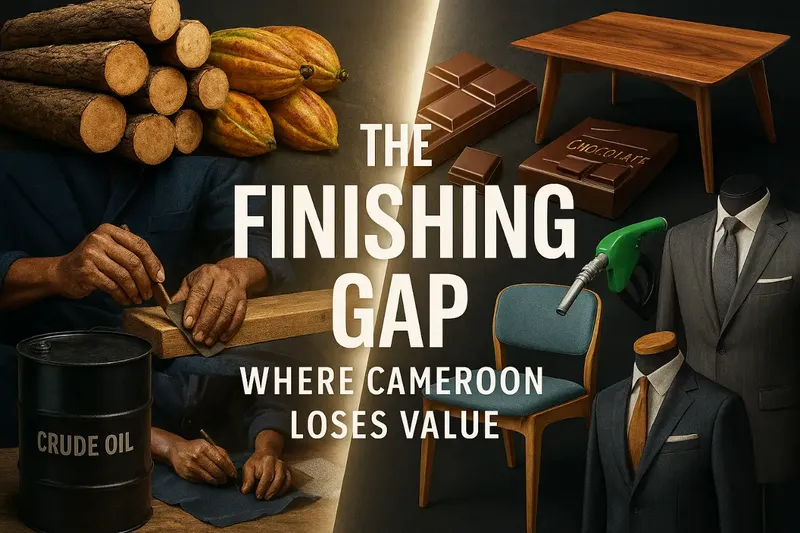
In Cameroon, our strength lies in extracting raw materials and taking the first steps of processing. We cut logs and produce timber, we pump oil and ship crude overseas. However, we frequently struggle to complete the journey: turning those resources into finished products that command higher profits and stronger reputations. This critical final stage, known as finishing, is where quality is certified, brands are built, and much of the value is realized.
Consider oil. Since a devastating fire in 2019, Cameroon’s only refinery, SONARA, has been out of operation. Despite an ambitious comeback plan, the country imported nearly 1.8 million tons of fuel in the first ten months of 2025—paying dearly for its inability to finish domestically what it starts. The planned Kribi refinery offers hope for better self-sufficiency but underscores the lesson: without finishing, Cameroon remains a price-taker.
A parallel story runs through timber and agriculture. We are world leaders in log and sawnwood exports, yet finished furniture in local showrooms is mostly imported. Our cocoa and coffee are sought after globally, but leave Cameroon as raw beans, not branded chocolate or specialty roasts. The challenge is clear: bridging the finishing gap means keeping more value within our borders and setting the stage for future prosperity.